A company of Xianheng international
 EN
A company of Xianheng international
EN
Understanding cable fault locators is essential for professionals in industries that rely on electrical systems. These devices play a critical role in identifying faults within cables and overhead lines, ensuring operational efficiency and safety. The working principle of cable fault locators involves advanced technology that helps professionals detect issues quickly and accurately. This article will cover the working principle of electrical cable fault locator, specifications to consider when sourcing them, key factors influencing their effectiveness, quality control standards, and common problems along with effective solutions.
Cable fault locators operate primarily through the use of electrical signals to detect faults in cables. The basic working principle involves sending a pulse of electricity along the cable. When this pulse encounters a fault—such as a short circuit, open circuit, or insulation failure—the signal is reflected back to the locator. The time taken for the echo to return helps determine the distance to the fault.
Different technologies are employed in these devices, including time-domain reflectometry (TDR) and frequency-domain reflectometry (FDR). TDR measures the time it takes for a pulse to be reflected back, while FDR analyzes the frequency of the reflected signal. Both methods provide valuable insights into the nature of the fault, enabling maintenance teams to address issues before they escalate into larger problems.
Professionals must understand the working principles behind these devices to ensure they select the right model for their specific applications. An effective high voltage cable fault locator can save significant time and resources during maintenance operations.
When sourcing cable fault locators, several key specifications should be evaluated to ensure the right fit for your operational needs.
Pulse Width and Resolution: The pulse width affects the locator's ability to differentiate between closely spaced faults. A shorter pulse width allows for higher resolution, enabling more precise fault location.
Distance Range: Different models offer varying distance ranges for fault detection. It's essential to choose a device that can cover the distances relevant to your applications, whether for short runs or extensive overhead lines.
Display Type: The display should be user-friendly and capable of providing clear, accurate readings. Look for locators with digital displays that can show real-time data and fault distance.
Sensitivity and Accuracy: High sensitivity allows the locator to detect minor faults, while accuracy ensures that the measurements are reliable. Evaluating these specifications is crucial for effective fault management.
Power Source: Battery-powered locators offer portability, while those with external power sources may provide longer operational durations but limit mobility. Consider your operational environment when selecting a power source.
By understanding these specifications, buyers can make informed decisions that align with their operational requirements.
Several key factors can influence the effectiveness of cable fault locators.
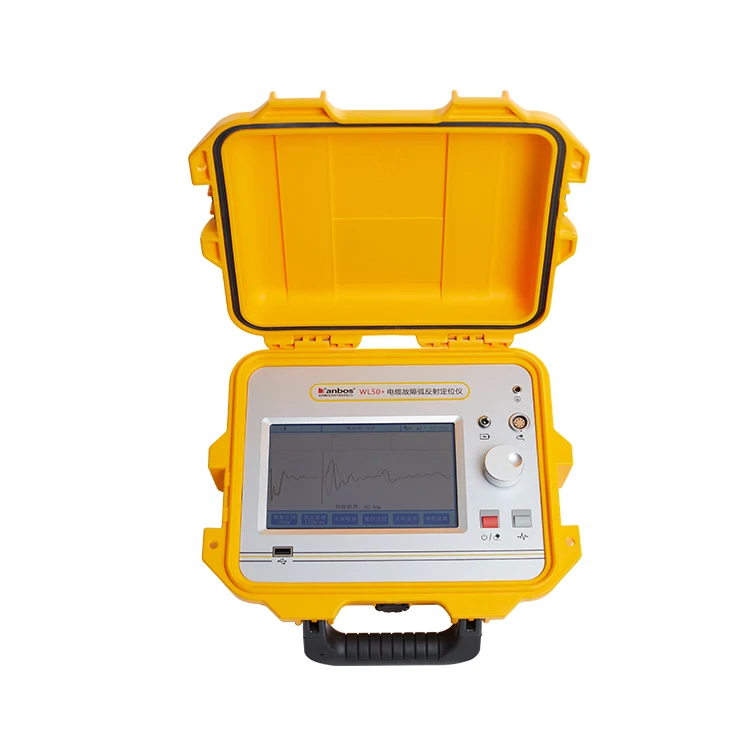
Environmental Conditions: The performance of Tanbos cable fault locators can be affected by environmental factors such as temperature, humidity, and electromagnetic interference. For example, using a locator in wet conditions may lead to inaccurate readings due to signal attenuation.
Cable Type and Condition: Different types of cables—such as coaxial, fiber optic, or power cables—may require specialized locators. Additionally, the condition of the cable can affect detection; aging or damaged cables may produce erratic signals.
Operator Training: Effective usage of cable fault locators requires skilled operators who understand how to interpret the readings accurately. Investing in training for personnel can significantly enhance the efficiency of fault detection processes.
Maintenance Schedule: Regular maintenance of both the locators and the cables being tested is essential. Ensuring that equipment is calibrated and in good working condition can prevent false readings and inefficiencies.
Understanding these factors will help businesses optimize their use of cable fault locators and improve their overall maintenance strategies.
Quality control is paramount when selecting Tanbos cable fault locators. Manufacturers should adhere to strict quality assurance processes to ensure that their products meet industry standards.
Testing Protocols: A reliable manufacturer should implement comprehensive testing protocols during production. This may include stress testing, calibration checks, and performance evaluations to ensure that each unit meets specified criteria.
Certifications: Look for products that have been certified by recognized industry bodies. Certifications can serve as indicators of compliance with safety and performance standards, providing assurance to buyers.
Warranty and Support: A solid warranty and customer support framework can be indicative of a manufacturer's confidence in their product quality. Buyers should inquire about warranty terms and the availability of technical support.
User Feedback and Reviews: Researching user experiences can provide insights into the reliability and effectiveness of specific models. Reviews from other professionals can highlight potential issues and the overall performance of the device in real-world applications.
By focusing on these quality control standards, buyers can increase their chances of purchasing a reliable and effective cable fault locator.
We concentrate our efforts on developing cutting-edge cable diagnostic technologies, enabling precise early warning and reliable fault diagnosis for enhanced grid safety and efficiency.
With over 15 years of focused experience in cable detection and testing since 2007, we have built deep expertise in the R&D and manufacturing of intelligent early-warning and fault-diagnosis equipment for cables and overhead lines.
Positioned as "Cable Diagnostic Experts at Your Side," we provide professional, trusted technology and support to clients, backed by strong industry credibility and a track record of innovation.
As an innovative technology enterprise, we integrate R&D, technical training, application support, and sales to provide a comprehensive, end-to-end solution for cable diagnostics.
Despite advancements in technology, users may encounter common issues with Tanbos cable fault locators. Recognizing these problems and their solutions can enhance operational efficiency.
Inaccurate Readings: This can occur due to environmental interference or operator error. To mitigate this, ensure that the locator is calibrated before use and that operators are trained to understand how to read the device accurately.
Battery Drain: Battery-powered locators may experience rapid battery depletion during extended use. To address this, always carry spare batteries and consider models that provide low battery indicators.
Signal Loss: Signal loss can happen due to poor connections or damaged cables. Regular inspections and maintenance of cables can minimize this risk, ensuring that the locator receives clear signals.
User Interface Confusion: Some devices may have complex interfaces that can confuse users. Selecting a model with an intuitive user interface and providing training can help alleviate this issue.
By being aware of these challenges and implementing effective solutions, businesses can improve their cable fault management processes and optimize the use of cable fault locator.
 AR
 HR
 CS
 NL
 FR
 DE
 EL
 HI
 IT
 JA
 KO
 NO
 PL
 PT
 RO
 RU
 ES
 SV
 TL
 IW
 ID
 SR
 SK
 UK
 VI
 ET
 HU
 TH
 TR
 FA
 MS
 GA
 HY
 AZ
 UR
 BN
 LA
 MN
 KK