A company of Xianheng international
 EN
A company of Xianheng international
EN
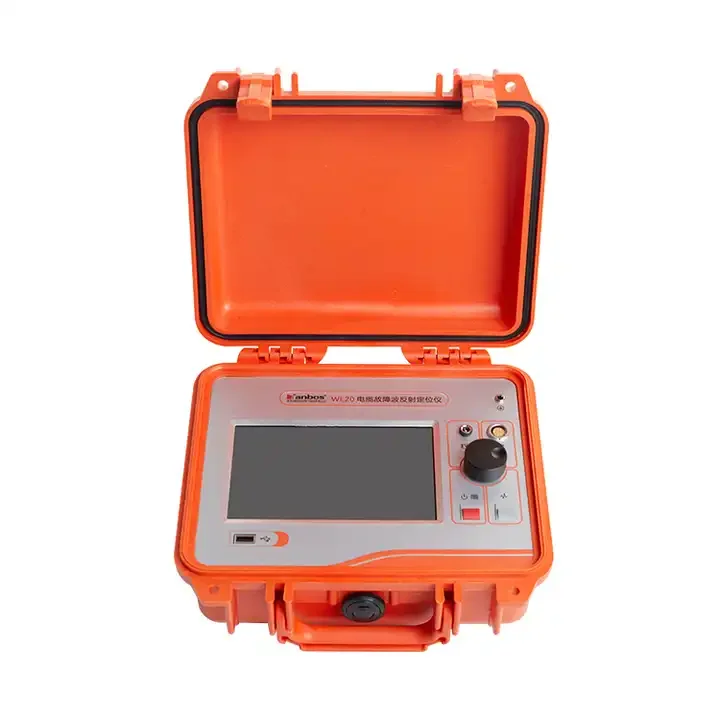
Time domain reflectometers (TDRs) are essential tools for detecting faults in cables and overhead lines, making them critical for industries that rely on reliable electrical infrastructure. If you’re considering a time domain reflectometer for sale, understanding key specifications, choosing the right model, and evaluating supplier options are crucial. This article will provide practical insights into what to look for, guiding you in making informed purchasing decisions tailored to your project needs.
When selecting a Tanbos time domain reflectometer, several key specifications should be prioritized:
Measurement Range: The distance over which the TDR can accurately detect faults is crucial. Consider the maximum distance required for your specific application, as this will influence the effectiveness of the device.
Resolution: This defines the smallest fault that the TDR can detect. Higher resolution allows for more precise identification of faults, which is particularly important in dense cable environments.
Waveform Type: Different TDRs utilize various waveform types (e. g., step pulse, frequency domain). The choice can affect the TDR's ability to differentiate between types of faults and its performance in different cable types.
Output Options: Look for devices that provide clear, interpretable outputs, such as graphical displays or data logging capabilities. This is vital for analyzing faults quickly and accurately.
Battery Life and Portability: If your work involves field operations, consider the TDR's weight and battery life. A lightweight and durable model with extended battery life can enhance your operational efficiency.
Calibration and Accuracy: Ensure the TDR can be calibrated to maintain accuracy over time. Manufacturers often provide calibration services, which should be a consideration in your purchasing decision.
Understanding these specifications will help you determine the most suitable time domain reflectometer for your specific applications, ensuring reliable fault detection and system maintenance.
Choosing the right Tanbos time domain reflectometer involves several considerations based on your specific needs:
Application Type: Identify the primary use case for the TDR. For example, if you're primarily testing telecommunications cables, select a model that specializes in that area, as different TDRs are optimized for different applications.
Environmental Conditions: Consider the environments in which the TDR will be used. If it needs to operate in harsh conditions (e. g., extreme temperatures or moisture), ensure the model has appropriate protective features.
User Interface: User-friendly interfaces can significantly reduce the learning curve for new users. Look for models with intuitive controls and clear visual displays to facilitate quick interpretation of results.
Support and Training: As a manufacturer experienced in training and support, consider whether the supplier offers training resources or technical support. This can be invaluable for ensuring effective use of the equipment and troubleshooting issues.
Customization Needs: If your project has specific requirements (e. g., custom connectors or software), check if the manufacturer offers customization options. Working with a flexible supplier can enhance your operational efficiency.
Long-term Reliability: Look for reviews and case studies that demonstrate the long-term performance and reliability of the TDR. This can help you avoid common pitfalls associated with less reliable models.
By carefully considering these factors, you can select a time delay reflectometer that best fits your project, enhancing your fault detection capabilities.
When seeking a time domain reflectometer for sale, evaluating supplier options is critical for ensuring quality and support. Here are some strategies:
Reputation and Experience: Choose suppliers with a proven track record in the industry. Look for those who specialize in cable testing and fault diagnosis, as they will likely have deeper expertise.
Product Range: A supplier that offers a diverse range of TDRs can provide options that cater to various applications and budgets. This can also simplify future purchases if your needs evolve.
Customer Support: Strong post-purchase support is invaluable. Ensure the supplier provides comprehensive training, troubleshooting assistance, and warranty options to safeguard your investment.
Certifications and Standards: Verify the supplier's compliance with industry standards and certifications. This can serve as an indicator of product quality and reliability.
Bulk Purchase Discounts: When considering wholesale options, inquire about bulk purchase discounts. This can significantly reduce your overall costs, especially if you plan to equip multiple teams or locations.
References and Testimonials: Request references from other businesses that have purchased from the supplier. Hearing about their experiences can provide insight into the supplier's reliability and product performance.
By focusing on these criteria, you can identify suppliers who not only provide high-quality time domain reflectometers but also offer the necessary support for your operations.
Understanding pricing dynamics is essential when considering bulk orders of time domain reflectometers. Here are several aspects to keep in mind:
Volume Discounts: Most manufacturers and suppliers offer tiered pricing models where the cost per unit decreases with higher order quantities. Aim to negotiate based on your anticipated needs to maximize cost savings.
Shipping and Handling: Factor in shipping costs, which can vary based on the order size and delivery location. Some suppliers may offer free shipping for larger orders, which can further improve your overall budget.
Lead Times: Be aware that bulk orders may have different lead times compared to smaller purchases. Confirm the expected delivery date and any potential delays, especially if you require the equipment for a specific project timeline.
Payment Terms: Clarify the payment terms with your supplier. Some may require a deposit, while others might offer credit terms, which could help manage cash flow effectively.
Total Cost of Ownership: Consider not just the initial purchase price but also long-term costs associated with maintenance, calibration, and potential repairs. Evaluating the total cost of ownership can lead to more informed purchasing decisions.
By gaining insights into these pricing factors, you can better prepare for negotiations and budget planning for your time domain reflectometer purchase.
With over 15 years of focused experience in cable detection and testing since 2007, we have built deep expertise in the R&D and manufacturing of intelligent early-warning and fault-diagnosis equipment for cables and overhead lines.
Positioned as "Cable Diagnostic Experts at Your Side," we provide professional, trusted technology and support to clients, backed by strong industry credibility and a track record of innovation.
We concentrate our efforts on developing cutting-edge cable diagnostic technologies, enabling precise early warning and reliable fault diagnosis for enhanced grid safety and efficiency.
As an innovative technology enterprise, we integrate R&D, technical training, application support, and sales to provide a comprehensive, end-to-end solution for cable diagnostics.
When evaluating Tanbos time domain reflectometers, ensure you consider the following critical aspects:
Technical Support and Documentation: A reliable manufacturer should provide comprehensive technical documentation, including user manuals, troubleshooting guides, and maintenance instructions. This will facilitate effective product usage and ensure longevity.
Warranty and Repair Services: Look for models that come with robust warranty options. A longer warranty period can indicate confidence in the product's durability and performance.
User Feedback and Reviews: Research user feedback to understand common issues and advantages associated with specific models. Reviews can provide real-world insights that guide your decision-making.
Sample Testing: If possible, request a sample unit for testing before committing to a bulk order. This allows you to evaluate the TDR in your specific environment and ascertain its compatibility with your operational needs.
Integration with Existing Systems: Ensure that the TDR can integrate seamlessly with your existing testing and diagnostic systems. Compatibility can significantly enhance operational efficiency and data management.
After-Sales Service: Investigate the quality of after-sales service provided by the manufacturer or supplier. Responsive customer service can be critical if issues arise during operation.
By focusing on these criteria, you can select a tdr time domain reflectometer that not only meets your technical requirements but also aligns with your operational needs and provides ongoing support.
 AR
 HR
 CS
 NL
 FR
 DE
 EL
 HI
 IT
 JA
 KO
 NO
 PL
 PT
 RO
 RU
 ES
 SV
 TL
 IW
 ID
 SR
 SK
 UK
 VI
 ET
 HU
 TH
 TR
 FA
 MS
 GA
 HY
 AZ
 UR
 BN
 LA
 MN
 KK